The brand thesis
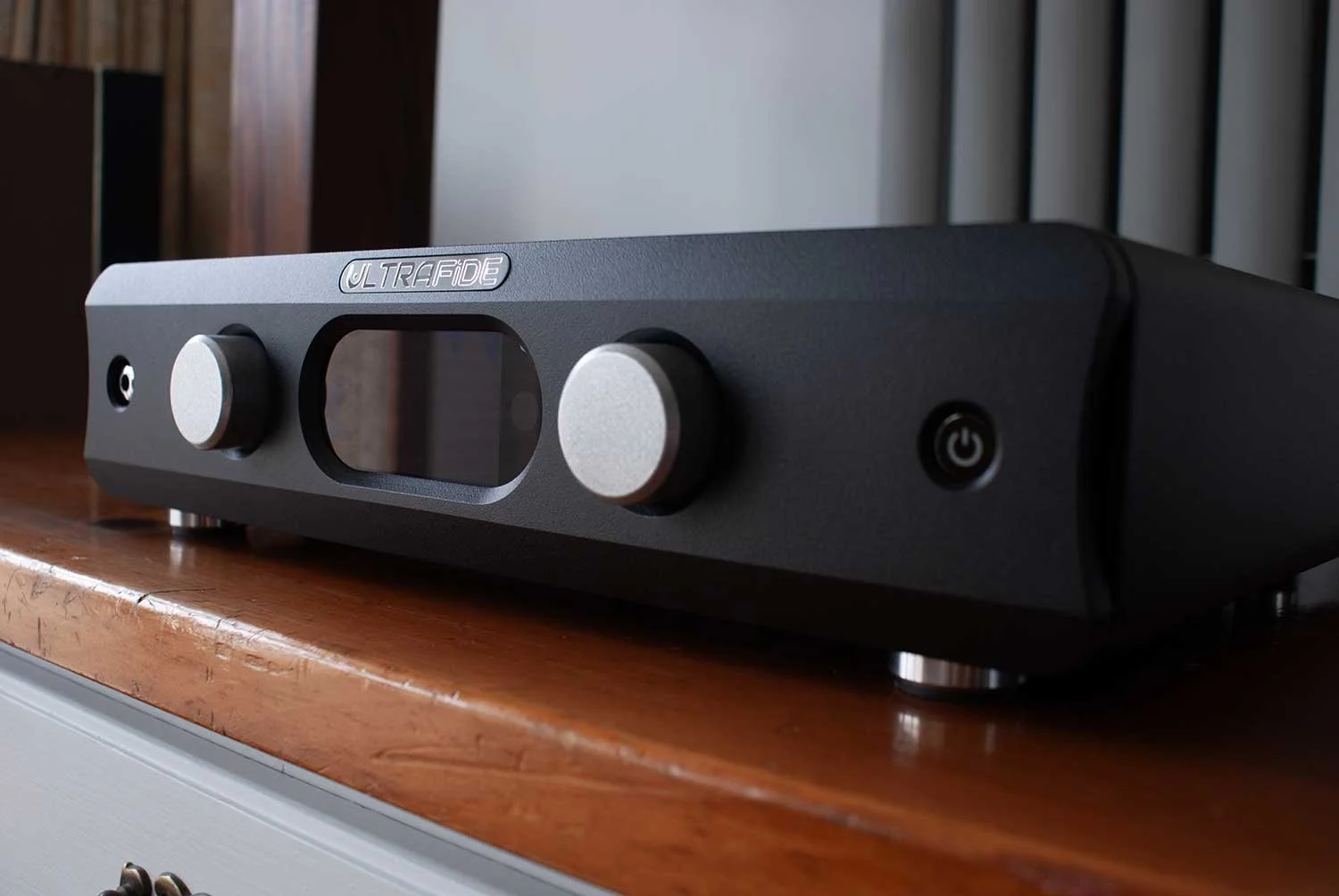
Ultrafide Audio is a British high-performance audio manufacturer with an engineering heritage superbly grounded in the world of professional sound reinforcement. Born from the expertise behind XTA and MC² Audio, two highly respected names in professional amplification and signal processing, Ultrafide brings decades of experience designing electronics for some of the most demanding audio environments into the world of high-fidelity reproduction. This is a company whose engineers understand power, precision, reliability and the complex relationship between an amplifier and the loudspeaker it drives. Designed and manufactured in East Devon, England, Ultrafide's products represent a distinctly engineering-led approach to high-end audio, combining the authority and control demanded by professional applications with the refinement, transparency and musical expression expected of the finest domestic systems.
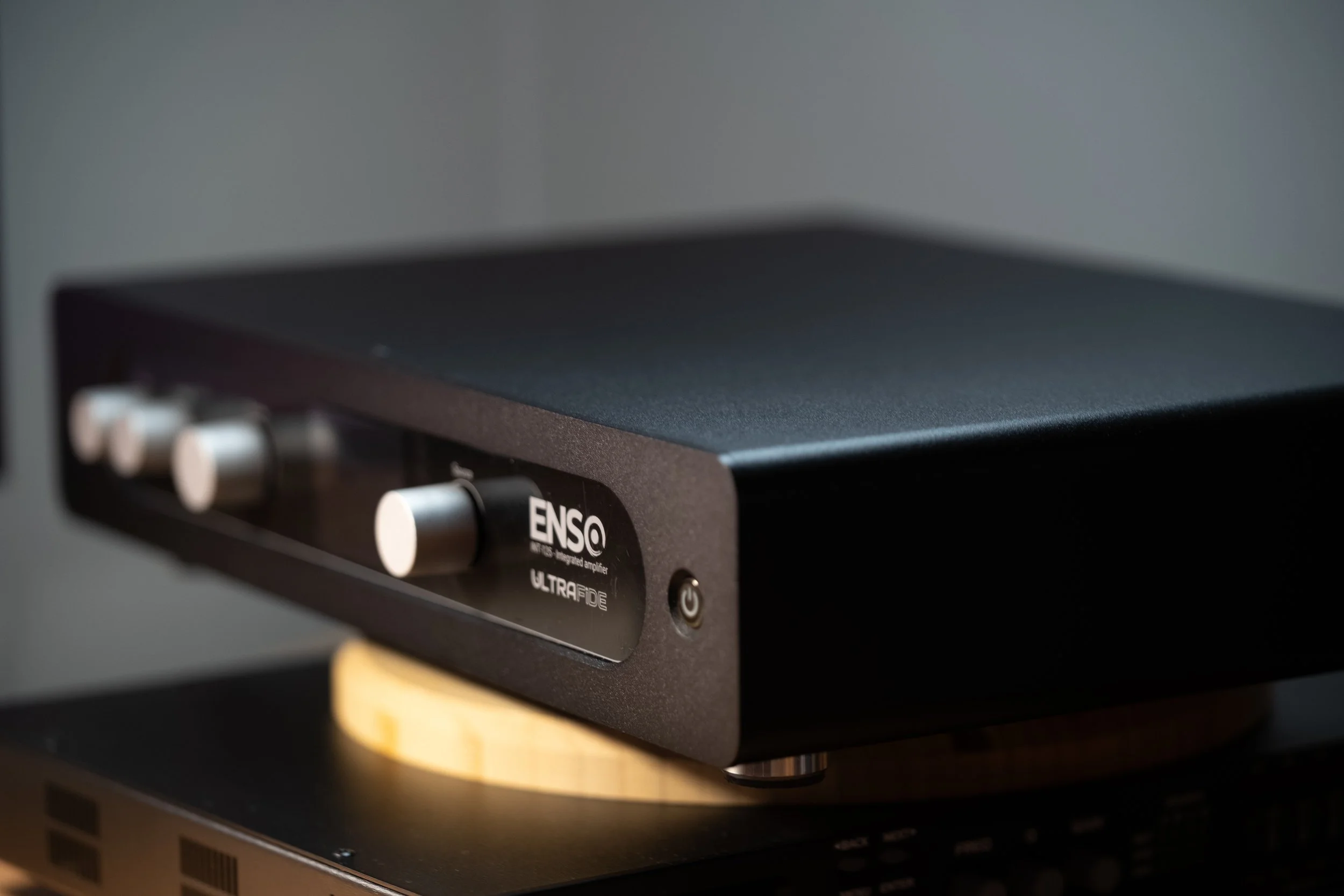
The brands approaches amplifier design from a simple premise: preserve the signal, maintain stability under load, and use no more circuitry than the task requires. This result is pure musical emotion with incredible power and scale. The technology behind the U500DC, SP500 and ENSO INT-125 shows how seriously the company follows that principle.
There are many ways to design an excellent audio amplifier, and the development of Class D has widened possibilities considerably. Power output has increased, stability and efficiency has improved and sophisticated amplifier modules are now readily available to manufacturers who want to incorporate proven technology into their products.
That being said, the engineering team at Ultrafide Audio chose another route. Its engineering team wanted control over the complete amplification architecture, including the way the output stage behaved, how it interacted with the power supply and how much circuitry sat between the incoming signal and the loudspeaker. IMO this proved to be an astute decision.
The result was UltraSigma, Ultrafide’s proprietary Class D output topology, used across the U500DC, SP500 and new ENSO INT-125. Yet understanding why Ultrafide developed its own Class D architecture tells us far more about the holistic engineering philosophy behind its products than the technology alone.
Developing UltraSigma
Speaking with Mark Bailey, Ultrafide’s commercial lead and perhaps its most passionate ambassador, he described the thinking that shaped the development: “UltraSigma was developed from Ultrafide’s conviction that our engineers could achieve the performance and sound they wanted more effectively through their own design than through any existing off the shelf Class D module.”
“The architecture uses delta-sigma modulation operating at a switching frequency of approximately 450kHz, placing the fundamental switching frequency far beyond the audible range. More importantly, developing the output stage internally allows Ultrafide to determine how the amplification circuit, power supply, feedback and thermal system would work together. Class D defines the operating principle of the amplifier, while its ultimate performance is determined by the wider architecture around it; the circuit design, power supply, feedback implementation and thermal management, and crucially, how each of these elements works together as a complete system.”
“Many commercially available Class D modules are designed around a useful combination of high efficiency, compact dimensions and relatively straightforward thermal management. These characteristics make them extremely versatile, particularly when manufacturers need to integrate significant amplifier power into smaller products.”
“Our engineering priorities were different.
Rather than pursuing maximum efficiency, our company was prepared to accept greater thermal demands where the engineering team, led by Alex, believed doing so benefited the performance of the circuit. The resulting heat is managed through the physical design of the amplifier, including substantial heatsinking and careful chassis engineering.”
“It represents an important part of Ultrafide's philosophy. Where an engineering problem can be addressed through mechanical design, power supply capacity or thermal management, we would rather solve it there than introduce unnecessary complexity into the audio circuit.
The result is a sound that is incredibly musical, with sustained power and plenty in reserve for even the most demanding systems, while preserving the emotional engagement that matters so much when listening to music. As a music fan, producer and DJ, for me this is the perfect combination for anyone who really cares about music playback..”
Keeping the signal path simple
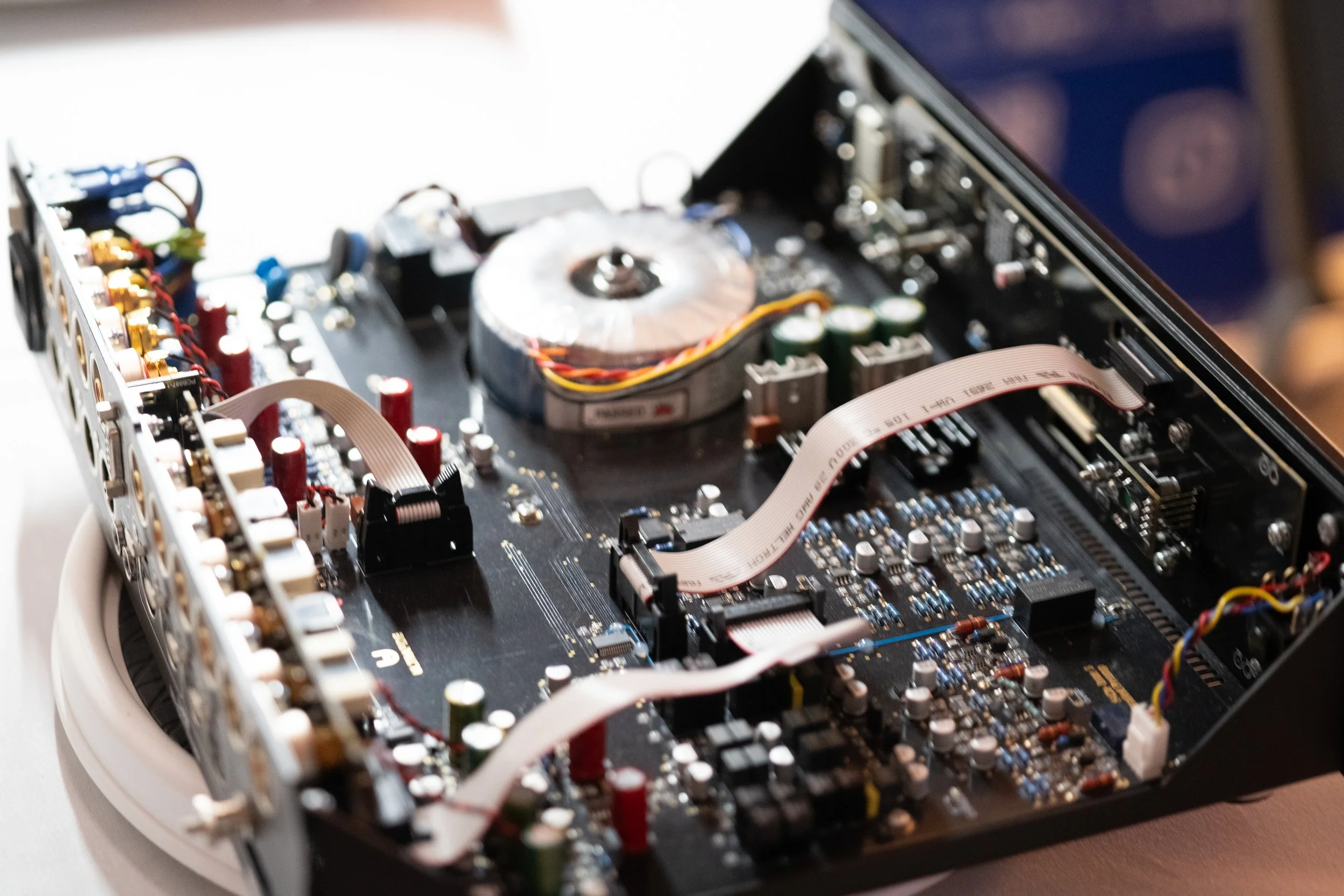
Mark continues, “This thinking runs through the entire Ultrafide range. Our high-gain amplification circuits follow the same two-stage principle: the first stage provides the voltage or current gain we need, while the second provides the control and feedback required to manage it.”
“We apply the same philosophy to our Class D and Class AB amplification, and even to the phono and headphone stages within our preamplifiers. We are always trying to keep the signal path as direct as possible.”
“Every component you introduce into that path has an electrical consequence, however small, whether that is noise, distortion, phase shift or some other change to the original signal. You can design around those effects, of course, but our starting point is simpler: does that additional circuitry actually need to be there?
If it does, we engineer it properly. If it doesn’t, we leave it out. That thinking has informed the architecture of Ultrafide products from the beginning.”
Class D amplification with a linear power supply
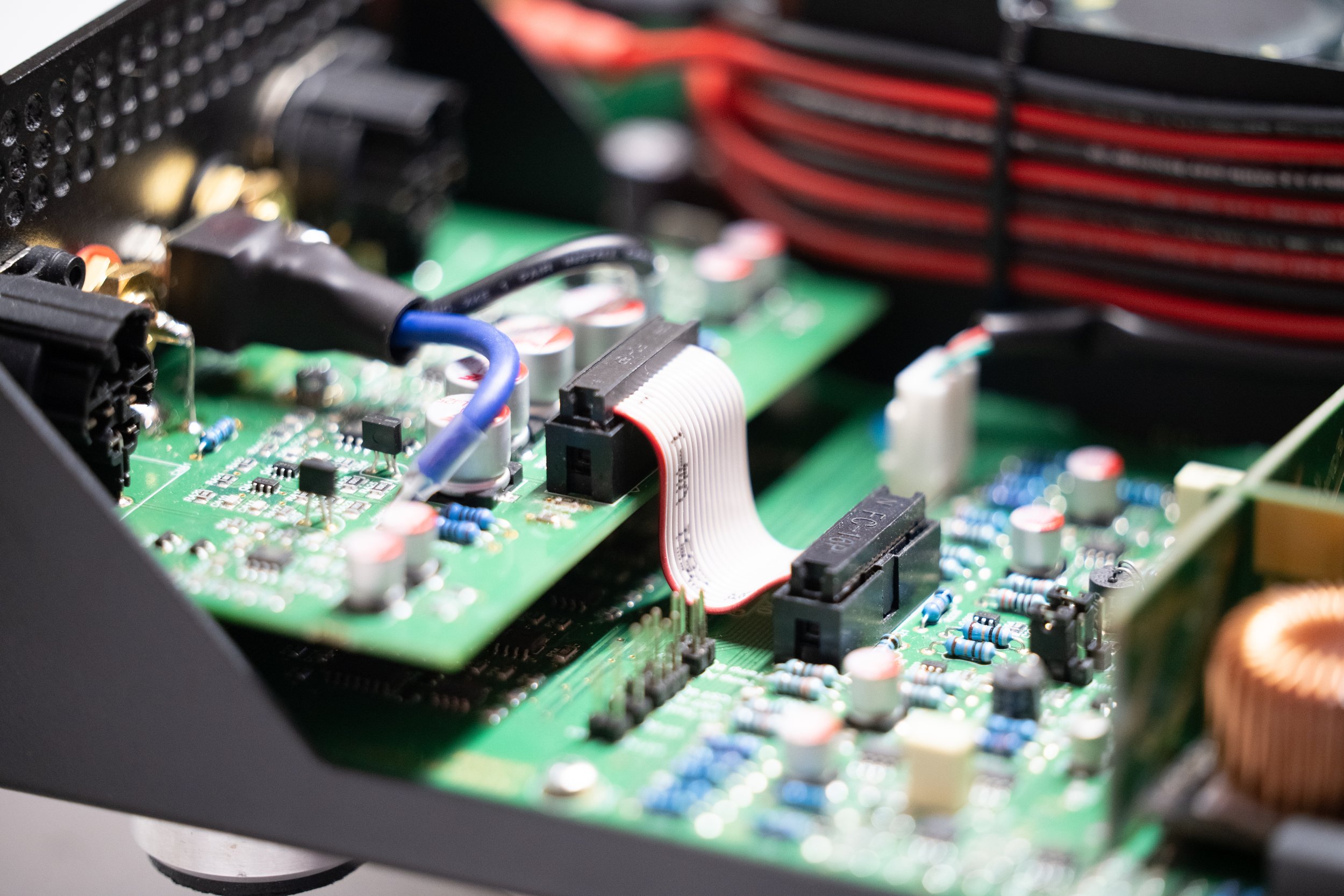
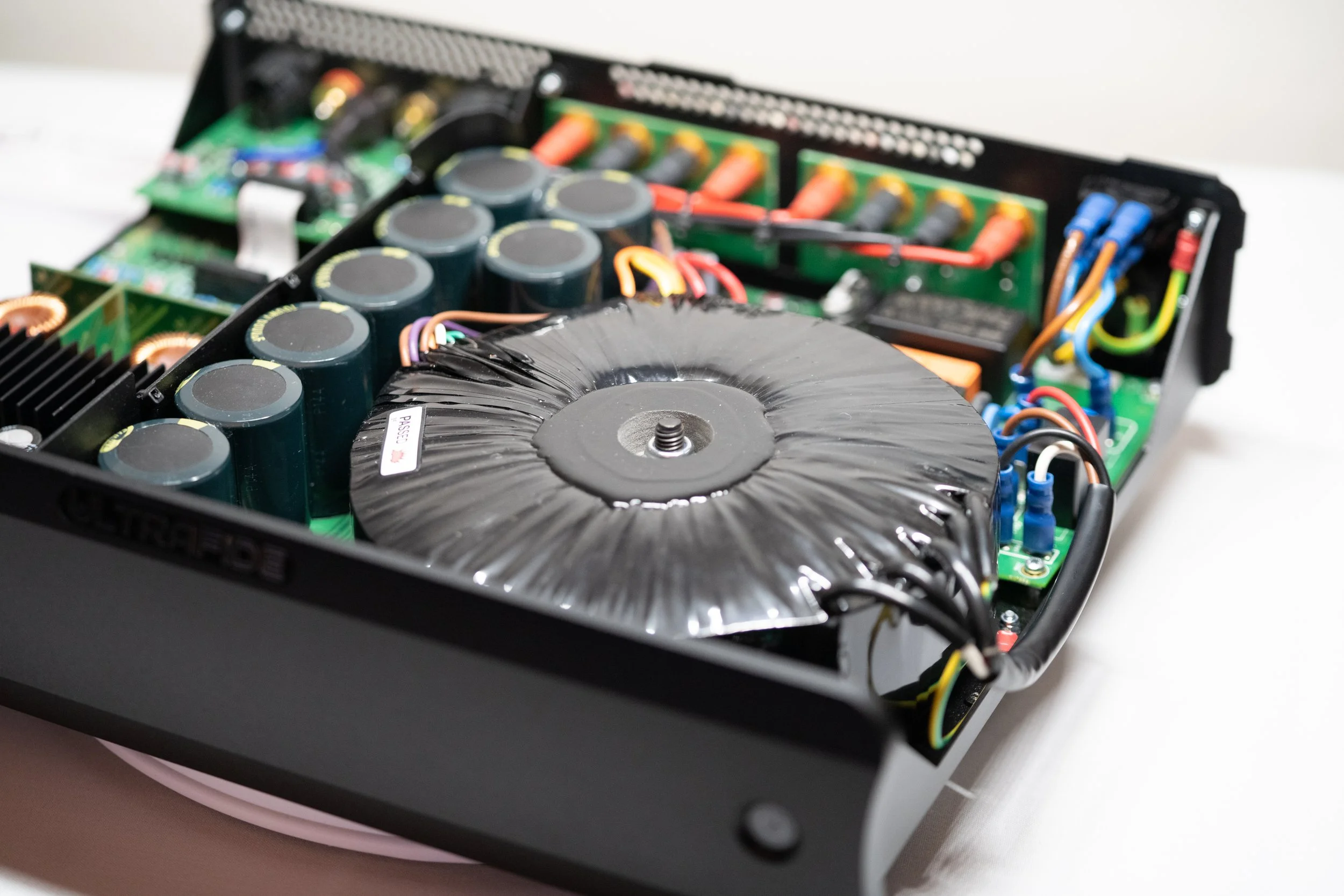
For me, one of the more interesting engineering decisions within the U500DC and SP500 is the combination of the UltraSigma Class D output stage with a custom-designed, shielded linear power supply.
Core to the design is a generously specified 500VA toroidal transformer. Class D amplification is frequently associated with switch-mode power supplies because the combination can produce substantial power from a compact and highly efficient package. There is, however, no requirement for the two technologies to be used together.
Ultrafide instead chose a substantial linear supply, giving the amplifier considerable current reserve and stable power rails from which the output stage can operate.
This becomes particularly relevant when we consider what an amplifier is actually being asked to do.
A loudspeaker presents a continuously changing electrical load. Its impedance varies with frequency, while music itself moves constantly between small signals and large transient demands. An amplifier may therefore move from reproducing delicate low-level information to delivering considerable current over an extremely short period of time.
Power output tells only part of that story. The ability of the power supply and amplification stage to remain stable during these transitions is equally important.
Ultrafide's substantial linear supply provides the electrical reserve required for these changes in demand, helping the amplifier retain control and composure as the musical load becomes more difficult.
Class A at the beginning of the signal path
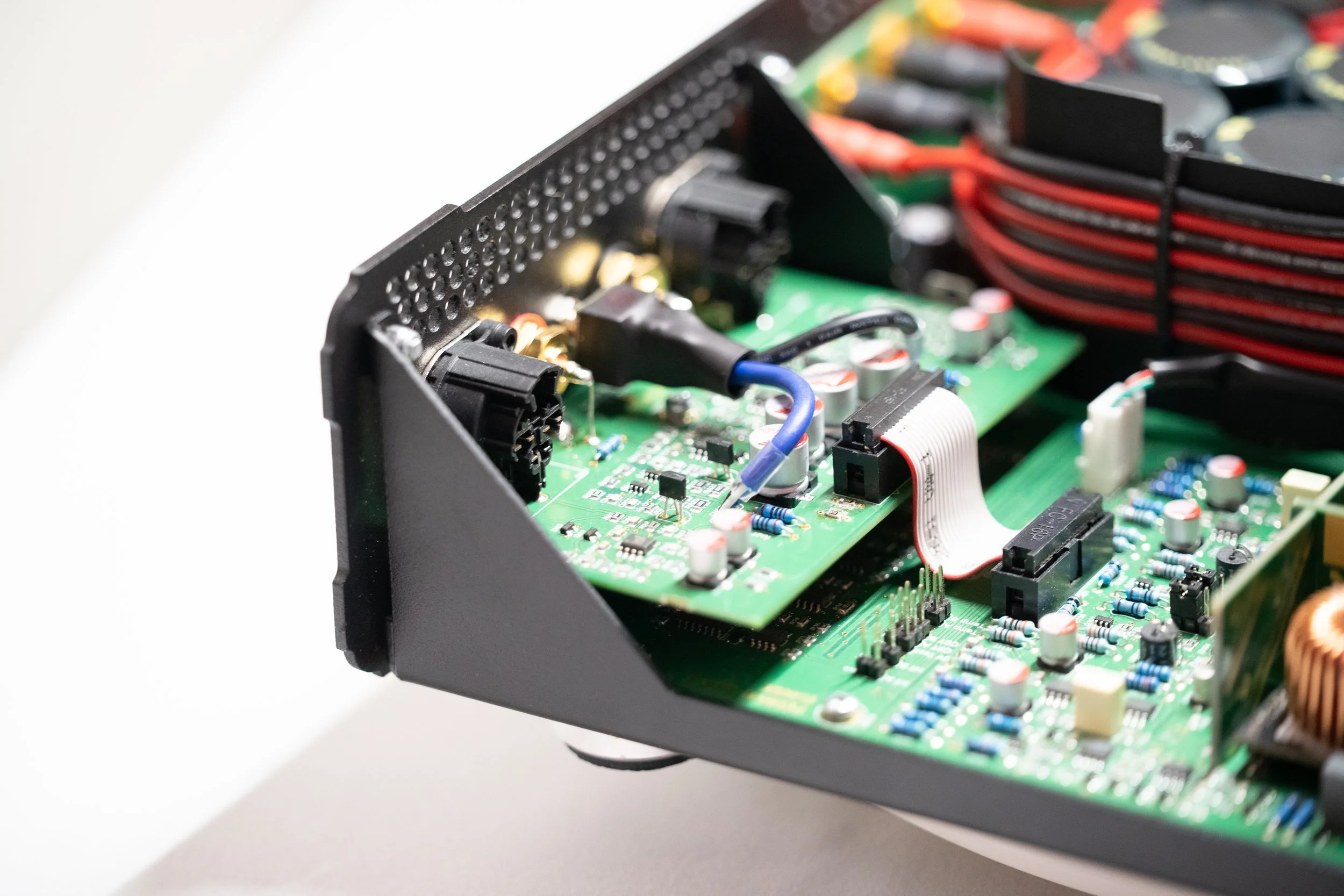
The UltraSigma output stage is partnered with a Class A input and driver stage, creating an architecture that uses different amplification technologies according to the job each is being asked to perform. Class A is used where the incoming signal is small and particularly vulnerable to alteration, while UltraSigma provides the power required to control the loudspeaker. The linear power supply provides the electrical foundation beneath both.
There is an important point here because discussions around amplifier design can easily become arguments whether Class A, Class AB or Class D represents the superior technology.
Ultrafide's approach is much more pragmatic. Each topology has strengths, weaknesses and engineering consequences. What is crucial is how those technologies are implemented and how effectively the complete amplifier behaves as a complete system.
Engineering pioneered from Pro-Audio origins.
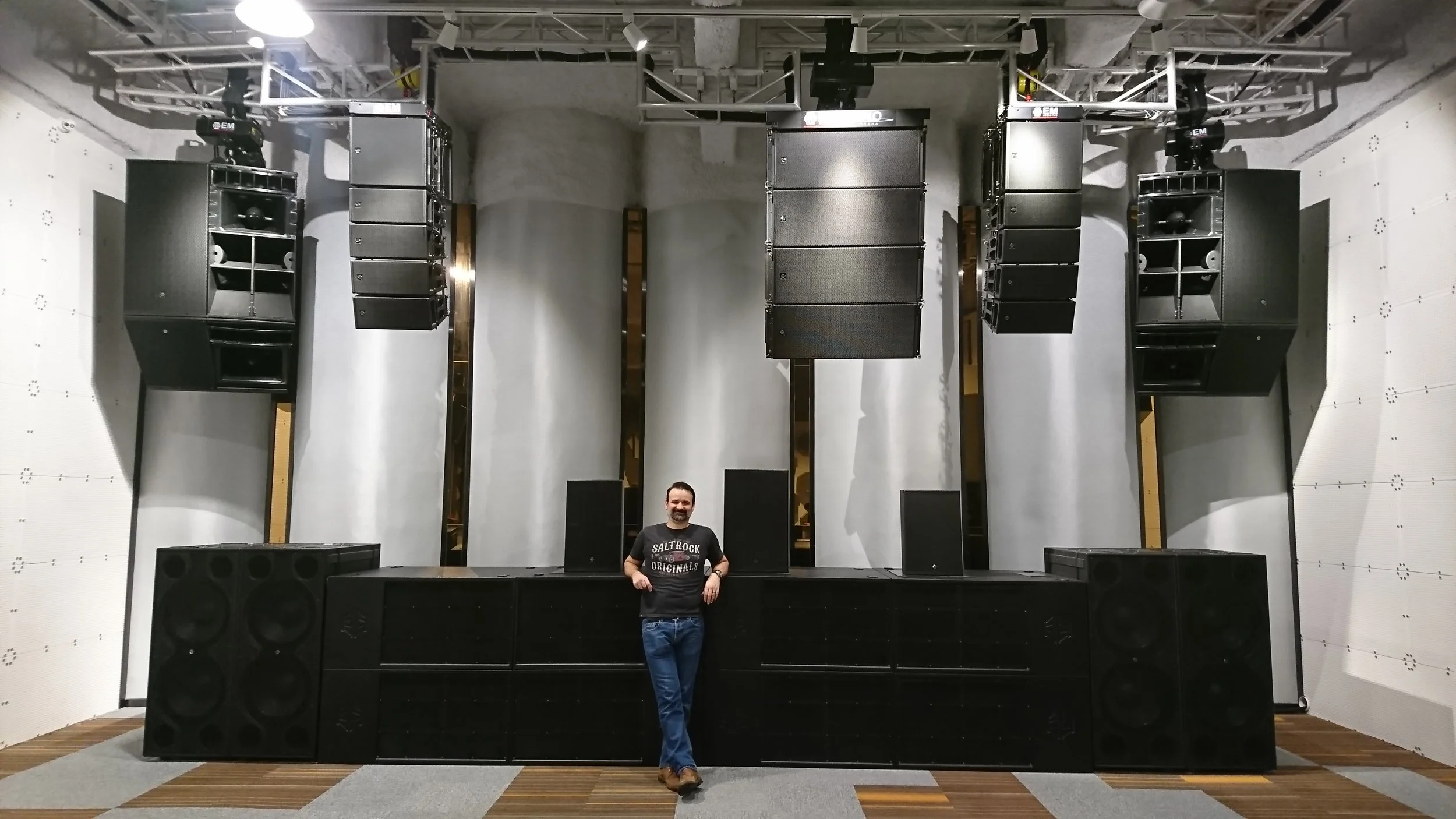
Ultrafide’s approach to audio engineering becomes much easier to understand when considered alongside the company’s professional audio heritage, something neatly captured in its strapline, “Pro Sound, Homebound”. The core technologies draw upon decades of professional amplifier development through sister company MC² Audio, whose amplifiers have been developed for recording, studio and professional applications since the 1990s.
Professional amplification requires a particular engineering discipline. In practice, this means delivering high power reliably, often for extended periods, while maintaining electrical stability, controlling thermal load and ensuring predictable behaviour under difficult loads. Think big club, dynamic music and serious sound pressure. Yet the fundamentals remain remarkably familiar to anyone who cares about music playback. The aim is clarity, emotional connection, scale and sound that remains coherent when the music becomes complex.
Ultrafide’s vision was to carry that experience into high-end domestic audio, where those same engineering qualities are applied to an environment in which resolution, low-level information, spatial presentation and tonal accuracy become particularly important.
The relationship between the two disciplines gives Ultrafide a very interesting market position. The engineering has been informed by the demands of professional amplification, while the implementation has been developed specifically around critical domestic listening.
What does this mean when listening?
After 25 years working in the consumer audio industry, I can safely say that however impressive the engineering, any audio technology ultimately has to justify itself through the experience of listening.
The combination of UltraSigma, Class A input circuitry, a substantial linear power supply, DC coupling and deliberately simple amplification paths is designed to allow the amplifier to remain stable as the musical signal changes. This becomes particularly important during rapid transient shifts; think of a dynamic orchestral recording moving from the finest low-level detail to a full crescendo, where the amplifier may be asked to supply significant current to the loudspeaker almost instantaneously.
When an amplifier manages these demands successfully, you hear it in the way the music remains clear, controlled and effortless, even as the scale and complexity increase. Fine detail is easier to follow, bass has weight and control, and when the music really opens up, the amplifier has the power and composure to follow without everything becoming congested or confused. To me, this is the holy grail of HiFi; a sound that our minds can easily follow, but our hearts can respond to. When the performance is this good, we cease being critical and simply lose ourselves in the music. Which is surely where we wanted to be all along.
This also explains why examining UltraSigma purely as a Class D technology misses most of the story. Ultrafide developed its own output stage to give its engineers greater control over signal integrity, and therefore performance, partnering it with a substantial linear power supply to provide the reservoir of power, delivery and reserve demanded by dynamic music. Class A is used where the signal first enters the amplification architecture, with DC coupling and a deliberately limited number of amplification stages helping to preserve signal integrity throughout the range.
None of these decisions exists independently. They are part of a remarkably consistent engineering philosophy, developed through decades of amplifier design and refined around a clear objective: preserve signal integrity, maintain stability, provide the power and current that music demands, and remove anything from the signal path that has no good reason to be there.
What I particularly like about Ultrafide is that you can follow the engineering logic from beginning to end. There is no mystery or audiophile mythology involved. Each and every decision has a purpose, and each compromise has been considered.
Ultimately, all of that engineering has to answer to the same basic test: what happens when you play music? Having listened to the results, I think Ultrafide has achieved something truly special. There is immense technical competence here, drawn from decades of professional audio engineering, but there is also an obvious love of music behind the products. Perhaps that combination explains why they work so well. It is the people who conceive, engineer and build these products who make the difference after all, and Ultrafide Audio and its sister companies have some of the very best.

Pricing that fulfills its ‘make exceptional audio accessible’ mission
Another element of Ultrafide’s proposition that resonates with me is its pricing structure, laser-focused on making its products as accessible as possible, without sacrificing on quality and its exceptional engineering. You can find products from highly reputable brands three times the price that don’t compete in terms of performance.
Beyond its Ultra Sigma combo (U500DC and U4PRE at £4,500 per box) and its statement ultra-powered premium DIAS (£27,499) - the game changer is its debut integrated product the ENSO (INT125) - which received rave reviews following its public unveiling at Bristol Hi-Fi Show this year - is set to retail at just £3,500.
My advice is simple: find your local Ultrafide dealer, book a demonstration and listen for yourself. I think you will be incredibly impressed by what this team of engineers and music fans have created.